What fabric is best for hospital uniforms that go through industrial laundering?
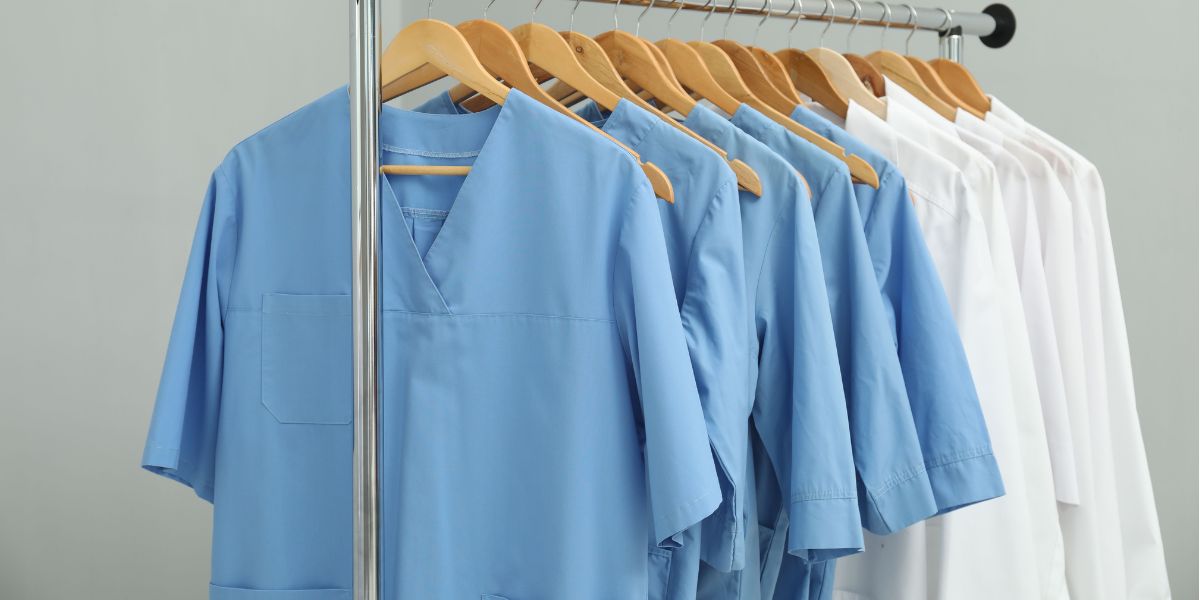
Hospitals and healthcare facilities rely heavily on durable, hygienic, and comfortable medical uniforms. Unlike many other industries, healthcare garments must withstand frequent industrial laundering, high temperatures, disinfectants, and daily wear.
Because of these strict conditions, choosing the right fabric is one of the most critical decisions in medical uniform manufacturing.
As experienced medical uniform manufacturers and medical uniform suppliers, we work closely with hospitals, clinics, laboratories, and healthcare chains that require uniforms capable of handling industrial laundry cycles without losing shape, color, or functionality.
Why Fabric Choice Matters in Medical Uniform Manufacturing
Healthcare uniforms are washed far more frequently than regular garments.
Most hospitals follow strict infection control protocols, meaning uniforms are washed:
- At high temperatures (60–90°C)
- With industrial detergents
- With chemical disinfectants
- Through hundreds of wash cycles
According to the World Health Organization, proper laundering of healthcare textiles plays a major role in infection control in medical environments.
Source: https://www.who.int/publications/i/item/9789241549950
Research shows that healthcare-associated infections (HAIs) affect millions of patients globally every year. The WHO estimates that 7 out of every 100 hospitalized patients in developed countries acquire at least one healthcare-associated infection.
Reference: https://www.who.int/news-room/fact-sheets/detail/health-care-associated-infections
Because of this, hospitals require medical uniforms that tolerate heavy sanitation processes without degradation.
This is why professional medical uniform suppliers prioritize fabric durability, shrink resistance, colourfastness, and antimicrobial compatibility when producing uniforms.
What are industrial laundering requirements for Medical Uniforms?
Industrial laundry processes are significantly harsher than domestic washing.
Hospital laundry operations usually involve:
High Temperature Washing
Healthcare textiles are often washed at 70°C to 90°C to eliminate pathogens and ensure sanitation.
The Centers for Disease Control and Prevention (CDC) recommends high-temperature laundering to ensure proper disinfection of healthcare textiles.
Reference: https://www.cdc.gov/infectioncontrol/guidelines/environmental/background/laundry.html
Strong Chemical Disinfection
Industrial laundries use chemicals such as:
- Chlorine bleach
- Oxygen bleach
- Alkali detergents
- Disinfectants
These chemicals are effective at killing pathogens but can damage weak fabrics.
High-Pressure Mechanical Action
Commercial laundry machines apply strong mechanical agitation that stresses fabric fibers. According to healthcare textile research published by the National Center for Biotechnology Information, hospital textiles undergo significantly more mechanical stress compared to domestic garments.
Reference: https://www.ncbi.nlm.nih.gov/pmc/articles/PMC7151498/
Frequent Washing Cycles
A hospital uniform may undergo 150–300 wash cycles annually, depending on hospital staff rotation and hygiene protocols.
Because of these conditions, fabric selection becomes critical during medical uniform manufacturing.
Best Fabrics for Medical Uniforms That Undergo Industrial Laundering
Not all fabrics perform well under industrial washing. Some shrink, fade, or weaken quickly.
Professional medical uniform manufacturers typically recommend the following fabrics.
Polyester Cotton Blend (Poly-Cotton)
Polyester-cotton blends are widely considered the best fabric for hospital uniforms.
Typical Blend Ratio
Common ratios include:
- 65% polyester / 35% cotton
- 70% polyester / 30% cotton
Why Hospitals Prefer Poly-Cotton
Poly-cotton offers the best balance between durability and comfort.
Advantages include:
- High resistance to industrial washing
- Wrinkle resistance
- Color retention
- Low shrinkage
- Good breathability
Polyester strengthens the fabric while cotton improves comfort and moisture absorption.
According to textile performance studies published by the Textile Research Journal, poly-cotton fabrics show significantly better durability during repeated washing cycles compared to pure cotton garments.
Reference: https://journals.sagepub.com/home/trj
Many medical uniform suppliers recommend poly-cotton because it can survive over 200 industrial wash cycles without losing structural integrity.
100% Polyester Medical Uniforms
Some hospitals prefer fully synthetic fabrics for uniforms.
Polyester fabrics are extremely durable and resist chemical damage during industrial laundering.
Benefits of Polyester Medical Uniforms
- Extremely strong fibers
- Resistant to bleach
- Maintains color after many washes
- Quick drying
- Lightweight
Because of these benefits, many medical uniforms online are available in polyester blends for healthcare staff.
However, polyester can sometimes feel less breathable compared to cotton blends.
Cotton-Rich Blends
Cotton-rich fabrics are sometimes used when comfort is the primary requirement.
Typical compositions include:
- 55% cotton / 45% polyester
- 60% cotton / 40% polyester
Cotton provides:
- Soft texture
- High breathability
- Better moisture absorption
However, cotton-heavy fabrics may experience:
- Slight shrinkage
- Wrinkling
- Faster wear in industrial laundry
For this reason, many medical uniform manufacturers reinforce cotton blends with polyester.
Antimicrobial Treated Fabrics
Modern medical uniform manufacturing often includes antimicrobial fabric treatments.
These fabrics help reduce bacterial growth between wash cycles.
Antimicrobial textiles may include:
- Silver ion treatments
- Copper infused fibers
- Chemical antimicrobial coatings
According to research published in the Journal of Hospital Infection, antimicrobial textile treatments can significantly reduce microbial contamination on healthcare fabrics.
Reference: https://www.journalofhospitalinfection.com/
Many hospitals now request these features from their medical uniform suppliers.
Key Fabric Features Hospitals Require from Medical Uniform Suppliers
When hospitals purchase uniforms from medical uniform manufacturers, they evaluate several performance factors.
Durability
Hospital uniforms must last through hundreds of wash cycles.
Durability is measured through:
- Fabric GSM (grams per square meter)
- Tear strength
- Abrasion resistance
High-quality medical uniforms typically use fabrics between 160–200 GSM.
Colorfastness
Uniform colors should not fade after repeated industrial washing.
Healthcare uniforms must maintain color consistency to ensure professional appearance and department identification.
Quality medical uniform manufacturing uses dyes designed for industrial laundry resistance.
Shrink Resistance
Shrinkage is a major issue in poorly designed uniforms.
Hospitals expect less than 3% shrinkage even after repeated washes.
Poly-cotton blends are particularly effective at maintaining size stability.
Stain Resistance
Healthcare environments involve exposure to:
- Blood
- Chemicals
- Medicines
- Cleaning agents
Many medical uniform suppliers now provide fabrics with stain-resistant coatings.
These coatings help maintain a clean professional appearance.
Industrial Laundering Standards for Healthcare Uniforms
Healthcare textile standards are regulated by several global organizations.
These include:
- CDC – Centers for Disease Control and Prevention
- WHO – World Health Organization
- OSHA – Occupational Safety and Health Administration
OSHA workplace hygiene guidelines emphasize the importance of properly sanitized healthcare garments for infection prevention.
Reference: https://www.osha.gov/healthcare
Professional medical uniform manufacturing must comply with these hygiene requirements.
Benefits of Buying Medical Uniforms Online from Professional Suppliers
Many hospitals now purchase medical uniforms online due to convenience and product variety.
Advantages include:
Easy Bulk Ordering
Hospitals can quickly place large uniform orders.
Wide Fabric Options
Online suppliers offer multiple fabric blends designed for industrial laundering.
Customization Options
Buyers can choose:
- Fabric types
- Colors
- Sizes
- Embroidery
Faster Procurement
Digital ordering systems simplify hospital procurement processes.
Future Trends in Medical Uniform Manufacturing
Healthcare uniforms are evolving with new textile technologies.
Some emerging innovations include:
Smart Antimicrobial Fabrics
Advanced fabrics that actively kill bacteria.
Moisture Management Textiles
Fabrics that regulate temperature and sweat.
Sustainable Medical Uniforms
Eco-friendly fabrics made from recycled polyester or organic cotton.
According to a market report by Grand View Research, the global healthcare textiles market is projected to reach $18 billion by 2030 due to increasing healthcare infrastructure and hygiene standards.
Selecting the right fabric is critical for hospital uniforms that must endure intensive industrial laundering.
Among all available options, polyester-cotton blends remain the most reliable choice because they offer durability, comfort, and resistance to chemical washing processes.
Professional medical uniform manufacturers and medical uniform suppliers carefully design fabrics that meet strict healthcare standards while ensuring comfort for medical staff.
As healthcare environments continue to evolve, modern medical uniform manufacturing is adopting new textile technologies that enhance hygiene, durability, and sustainability.
For hospitals seeking reliable uniforms, working with experienced medical uniform suppliers ensures garments that perform well in demanding healthcare environments while maintaining a professional appearance.
Frequently Asked Questions (FAQs)
Polyester-cotton blends are the most durable fabrics for hospital uniforms because they resist shrinkage, fading, and fiber damage during industrial washing.
Polyester improves durability, wrinkle resistance, and color retention, making it ideal for industrial laundering conditions.
High-quality medical uniforms can withstand 200–300 industrial wash cycles depending on fabric composition and manufacturing quality.
Antimicrobial fabrics help reduce bacterial growth on textiles, improving hygiene in healthcare environments.
Hospitals typically purchase from experienced medical uniform suppliers or medical uniforms online platforms that specialize in healthcare garments.
Categories
Recent Posts

What Fabrics Are Best for Corporate or Industrial Uniforms Manufactured in Mumbai?

How Can I Buy Security Uniforms in Bulk at the Best Price Without Compromising Quality?

Why Mumbai Schools Trust Local School Uniform Manufacturers in Mumbai

Why Mumbai’s Healthcare Uniform Manufacturers are Setting New Standards for Breathable, High-Performance Medical Wear

7 Best Corporate Uniform Fabrics That Actually Survive Mumbai’s Brutal Climate Trusted by Top Corporate Uniform Manufacturers in Mumbai